See whether members take the medication your programmes pay for
DoryGo combines pre-sorted multi-dose blisters, a sensor pill box and a patient app. It records each dose as it is taken, so a programme can be evaluated on recorded intake rather than on claims.
Not an insurer?
Same product, different entry point.
01 — The problem
You fund adherence programmes you cannot measure
A health plan sees adherence through claims: which prescriptions were filled, and when. That is enough to estimate supply. It is not enough to know whether members take what they collect, or whether a programme changed anything.
Claims show dispensing
A filled prescription is the measure furthest from actual intake, and usually the only one a plan has.
Programme effects are hard to attribute
Without intake data, the effect of an adherence programme cannot be separated from changes that would have happened anyway.
The plan does not deliver care
Following up on missed doses needs someone close to the member: a pharmacy, a nurse line or a treating physician.
of plasma samples contained the study drug, while self-report and returned pill counts indicated 86–90% adherence (HIV prevention trial, women in South Africa, Uganda and Zimbabwe).
Source: Marrazzo et al., New England Journal of Medicine, 2015 (VOICE trial)
02 — The economics
Measurement first, programme design second
of patients in developed countries do not take medication for chronic conditions as prescribed.
saved in avoidable emergency and hospital cost per additional USD spent on making patients adherent (diabetes, hypertension, hyperlipidaemia).
in annual European cost from avoidable hospitalisations, emergency care and outpatient visits caused by non-adherence.
in estimated annual cost of medication non-adherence to the US healthcare system.
A health plan carries the cost of avoidable admissions but does not run the pharmacy or the clinic. Most adherence programmes therefore work through reminders, education or co-payment design — and are evaluated on refill data, which measures supply rather than intake. DoryGo combines a medication management service with a record of intake: pre-sorted medication in a fixed supply rhythm, and a dose-level record of whether it was taken.
Better intake tends to raise medication spend; according to the literature, the cost of non-adherence sits downstream in admissions and emergency care. We do not claim a general return or a clinical benefit. What we provide is a reliable record of intake, so that your programme can be judged on your own members rather than on published averages.
03 — The product
Three parts, one continuous record
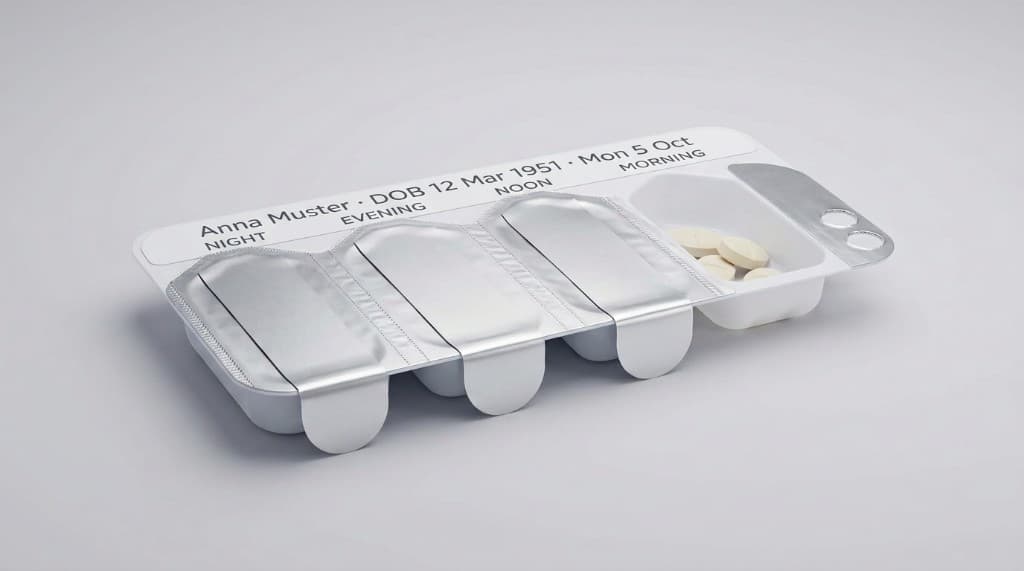
Pre-sorted multi-dose blister
A pharmacy sorts the full regimen into dated, time-labelled compartments, so the patient never assembles a dose themselves.
- —One compartment per intake time, printed with date and patient name
- —Regimen changes handled at the pharmacy, not by the patient
- —Removes the manual weekly re-sorting step entirely
Sensor pill box
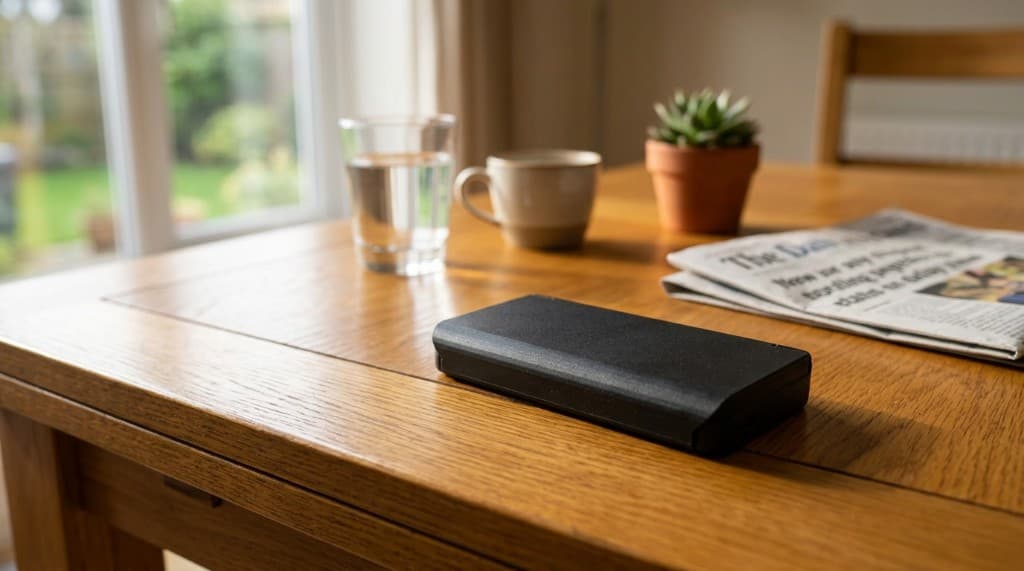
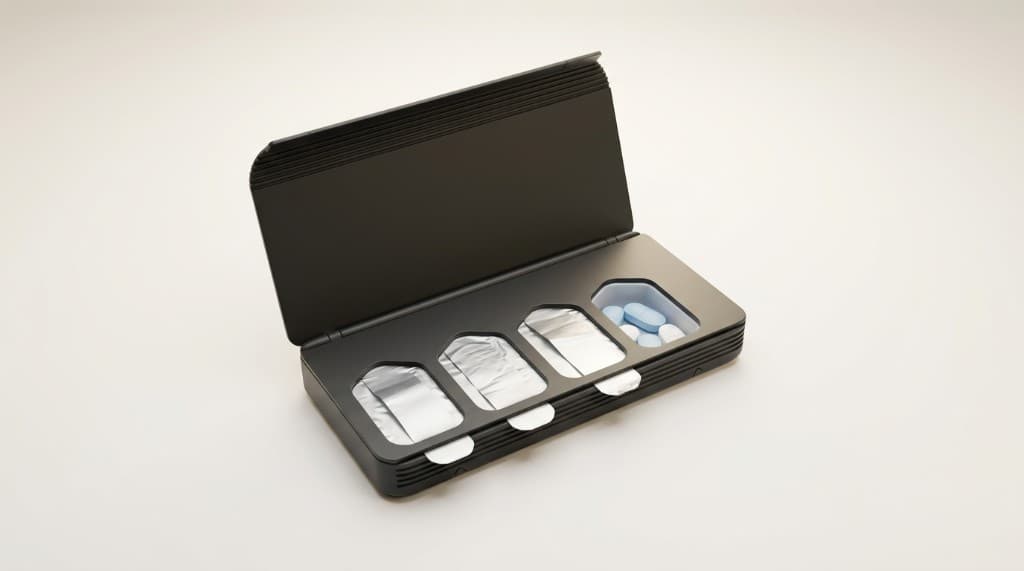
A new blister is inserted each day. The box registers each compartment opening passively — no app step, no confirmation, nothing else for the patient to remember.
- —Timestamped event per opening, at compartment level
- —Local buffering; syncs when a connection is available
- —Works for patients who do not use a smartphone
Patient app and dashboard
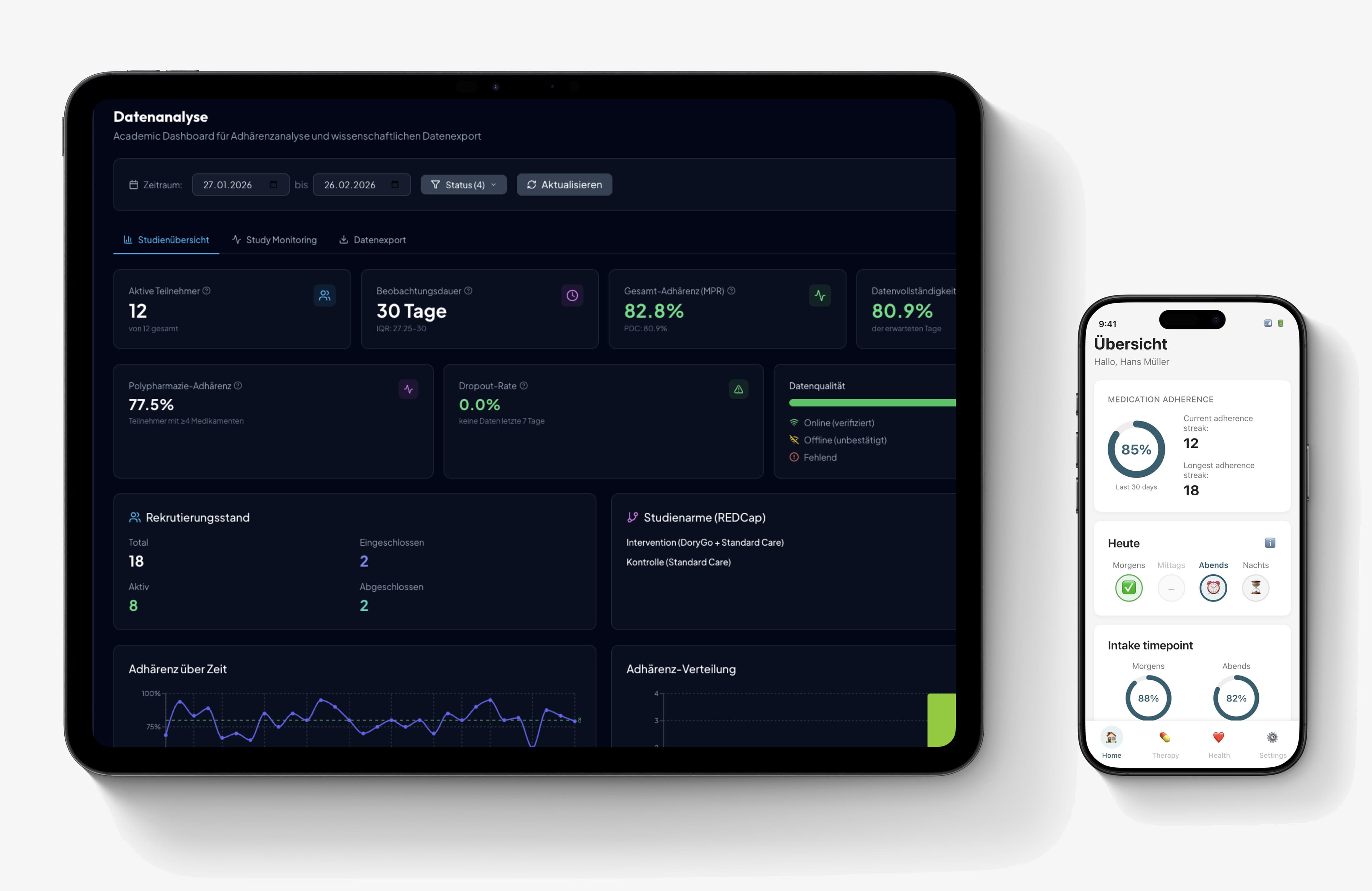
Patients see their own schedule and history. Your team sees recorded intake across all participating patients, sorted by missed and late doses.
- —Overview of all participating patients, sorted by missed and late doses
- —Intake history per patient
- —Role-based access; export via FHIR or CSV
04 — Workflow
From the pharmacy bench to your team, in five steps
05 — How step 1 is set up
Blistering runs through a licensed pharmacy partner in your market
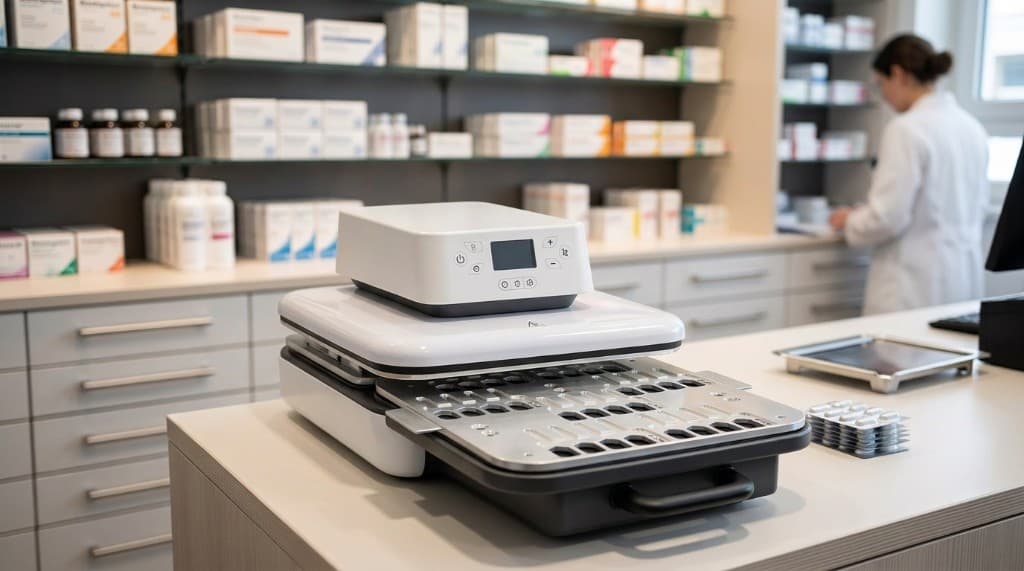
There is one route, and it is deliberate. The pre-sorting is carried out by a local, licensed pharmacy partner, which we identify and set up together with your organisation. Dispensing stays where it is already regulated and already trusted. We equip that pharmacy with the sealing machine, the blisters and the foils, and we supply the box, the app, the dashboard and the integration.
National rules for dispensing, repackaging and medical-device classification differ, and they determine what is possible in your market. We clarify this per country before a pilot is scoped, and say so plainly where something is not viable.
06 — Evidence
What is shown, and what is not
Both columns are part of the same answer, and they carry the same weight. We would rather you take the right-hand column into your evaluation than discover it later.
What we can show today
- The box records each compartment opening without any patient input, which removes self-report bias by construction.
- The full chain is built and working end to end: blister, sensor box, patient app, dashboard.
- In our own development testing, compartment openings were detected without error over several months of continuous bench testing, and battery life reached 18 months at four openings per day. These are internal measurements; independent validation is planned.
What we have not shown yet
- Any effect on treatment results. Whether a reliable record of intake improves them is the question our pilots are designed to answer.
- A validated cost-offset figure for a specific insured population. We will not quote an ROI we cannot defend.
- Long-run persistence: how intake behaves after two years of use.
- Deployment at the scale of a full health system.
07 — Pilot
What a first project looks like
- Cohort
- Insured members on long-term medication, defined together with your medical or programme team.
- Duration
- Pre-defined period of recording, plus a set-up and onboarding phase beforehand.
- What we measure
- Intake per dose and compartment, timing of each dose, data completeness and member retention — and, if you provide them, admissions and emergency contacts for the same period.
- What we provide
- Boxes, blister supply via a licensed pharmacy partner, member onboarding material, dashboard access, and a named contact in Zurich.
- What we need from you
- A programme owner, a data-protection contact, a route for member selection and consent, and a care partner who follows up on missed doses.
- What you get
- Recorded intake for a defined member group, a written read-out with the limitations stated, and a clear basis for deciding whether to fund at scale.
08 — Integration
Into the systems you already run
09 — Compliance
Where the data sits, and who may see it
10 — About us
Who you would be working with
DoryHealth is a small Swiss company based in Zurich. We build and operate DoryGo ourselves, which means a pilot is run by the people who built the product rather than handed to an implementation team.
11 — Contact
Request a scoping call
Thirty minutes, no slide deck. We ask about your member group and your programme design, and tell you whether a pilot makes sense.
DoryHealth AG · Hagenholzstrasse 81a, 8050 Zürich
hello@doryhealth.com